Table Of Content

Minoxidil may irritate your scalp and cause dryness, scaling, itching and/or redness. In addition, a healthcare provider might recommend forms of light therapy like using the HairMax Lasercomb®. Another FDA-approved laser product is the Theradome LH80 PRO® helmet and low-light laser helmets and caps. Hair grows on almost all of your skin surfaces — not the palms of your hands, soles of your feet, lips or eyelids. It is typical for a certain amount of hair — usually around 100 strands — to fall out every day. Below are some frequently asked questions about hair loss.
What causes hair loss in women?
The Food and Drug Administration (FDA) has approved two low-light lasers to help treat hair loss. The HairMax Lasercomb is approved to treat female-pattern hair loss and male-pattern hair loss, and the Theradome LH80 PRO Helmet is also approved to treat hair loss. In the case of conditions like telogen effluvium that are linked to stress levels, it’s best to incorporate simple ways to relieve stress.
Women and Hair Loss: Causes
But consult your doctor before you start to worry; thinning hair is often reversible, Dr. Simpson says. Only about 1 to 2 percent of your hairs are in the catagen phase at any given time. If you have a deficiency, your doctor may suggest multivitamins or supplements like iron and biotin.
What are some tips for dealing with hair loss?
“Studies have shown that rapid or significant weight loss can trigger hair loss,” Dr. Wider explains, commonly due to the deprivation of certain nutrients, including protein. With ringworm, a fungus you contract by touching an infected person or animal, you’ll notice red patches on your scalp, which may be diffused, Dr. Jakubowicz says. A physical examination can determine which specific condition you have. Excess TSH usually indicates hypothyroidism, while abnormally low levels suggest hyperthyroidism.
If you’re concerned by the amount you’re shedding, there are ways to tell if you’re losing too much hair. During telogen effluvium, hair shifts faster than usual from its growing phase into the “resting” phase before moving quickly into the shedding (or telogen) phase. “High-stress environments prevent the body from giving hair the TLC that it needs, causing hair to shed and fall out,” Dr. Goldenberg says. Female-pattern baldness typically starts with scalp hairs becoming progressively less dense. Many women first experience hair thinning and hair loss where they part their hair and on the top-central portion of the head.

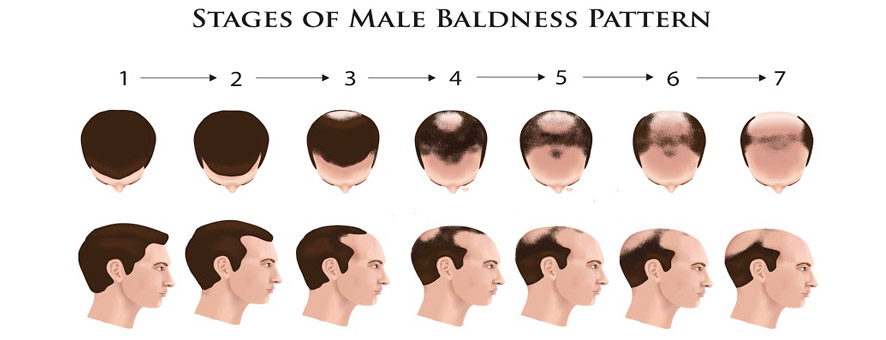
Other forms of birth control that affect the hormones, such as implants and skin patches, may also cause hair loss. Early treatment of a receding hairline (frontal fibrosing alopecia) might help avoid significant permanent baldness. The cause of this condition is unknown, but it primarily affects older women. In the type of patchy hair loss known as alopecia areata, hair loss occurs suddenly and usually starts with one or more circular bald patches that may overlap. Male-pattern baldness typically appears first at the hairline or top of the head.
Chief Medical Editor, Harvard Health Publishing
They need to be treated by a team of mental health professionals, dietitians, and other medical specialists. Another thing Dr. Fox suggests paying attention to is the amount of hair you’re shedding when you’re brushing your hair. Pay attention to how much hair is falling onto the floor while you’re styling it as well as how much your brush collected.
Hereditary hair loss
However, hair loss can also be permanent depending on the cause and how it affects the hair growth cycle. Hair shedding due to an illness such as COVID-19 typically improves three to six months after recovery. Losing around 50–100 hairs daily through combing, brushing, washing, and styling is normal. When excessive hair shedding occurs, it's known as telogen effluvium.
What are common types of hair loss?
Your doctor may suggest a blood test to check your follicle-stimulating hormone and estradiol levels to rule out any other causes for the changes you’re going through, the NIA says. But when you don’t have the right amount, you may notice changes in bodily functions. When too little is pumped out, you are said to have hypothyroidism, or an underactive thyroid. If your body makes too much of the hormone, you’re said to have hyperthyroidism, or an overactive thyroid. Beyond the physical aspect, it can take a toll on a person emotionally—especially for women, according to a 2015 review of research. Because hair is so closely identified with femininity, it can impact your self-esteem, make you feel depressed, and get in the way of your relationships with other people.
However, if you feel like you’re seeing more of it, that’s something to pay attention to. “If you can see into the scalp easier and the follicles seem more individualized” it could be a sign that you’re experiencing hair loss that isn’t normal, Dr. Allenby says. There are several reasons why you might be losing your hair. According to Agbai, genetics, hormonal shifts, stress, underlying medical conditions, nutritional deficiencies, and scalp inflammation are notable factors. Many women experience a lot of hair shedding after they had a baby, usually caused by falling estrogen levels after delivery.
But it typically takes a major stressor, like divorce or the death of a loved one (a big work deadline or a blind date probably isn’t enough to make your strands say sayonara). See a dermatologist as soon as possible when you notice hair loss. The sooner you get treatment, the more effective it’ll be. In many cases, a person’s hair will return to its usual state once a doctor has treated the underlying condition.
Common Wet Hair Mistakes That Are Secretly Damaging Your Locks - Real Simple
Common Wet Hair Mistakes That Are Secretly Damaging Your Locks.
Posted: Mon, 15 Apr 2024 07:00:00 GMT [source]
“Increased shedding in the shower” could also be a sign of significant hair loss, says Fox. Of course, it’s normal to regularly find some hairs on the shower floor, but an increased amount on a consistent basis may warrant a call to your doctor. This is a sign where attention to detail is important, because you need to be aware of your baseline before you can determine whether or not you’re losing more hair than normal. Alopecia areata is an autoimmune condition that is characterized by “round patches of hair loss on the scalp,” although it can occur elsewhere on the body, Agbai says. While the exact reason for this type of hair loss is unknown, it is generally understood that “the immune system mistakenly attacks hair follicles, leading to hair loss,” she adds. You’ll notice if you start to lose weight quickly (typically defined as losing more than 5 percent of your weight in six months to a year).
In fact, it’s getting more and more common,” says Gary Goldenberg, M.D., assistant clinical professor of dermatology at the Icahn School of Medicine at Mount Sinai in New York City. We talked to Dr. Deirdre Hooper, a board-certified dermatologist based in New Orleans, to find out. Advanced treatments are available for more serious hair loss. Excessive washing, bleaching, brushing, and heat styling can also have an impact on how much of your hair falls out every day.
So when you look down at the drain and see a clump of lost hair strands, it’s easy to assume that there’s a health problem causing hair loss. But some hair loss is normal for everyone and at every age. Minoxidil (Rogaine) is a topical medication (the type you apply to your scalp) approved by the FDA for female pattern hair loss. It's is available over the counter as 2% and 5% solutions. It takes about 6-12 months of this once-daily use foam treatment to see results.


No comments:
Post a Comment